The Ancient Engineers
Author: L. Sprague de Camp
Subject: History; Science
530e3736-73d4-4cd8-a
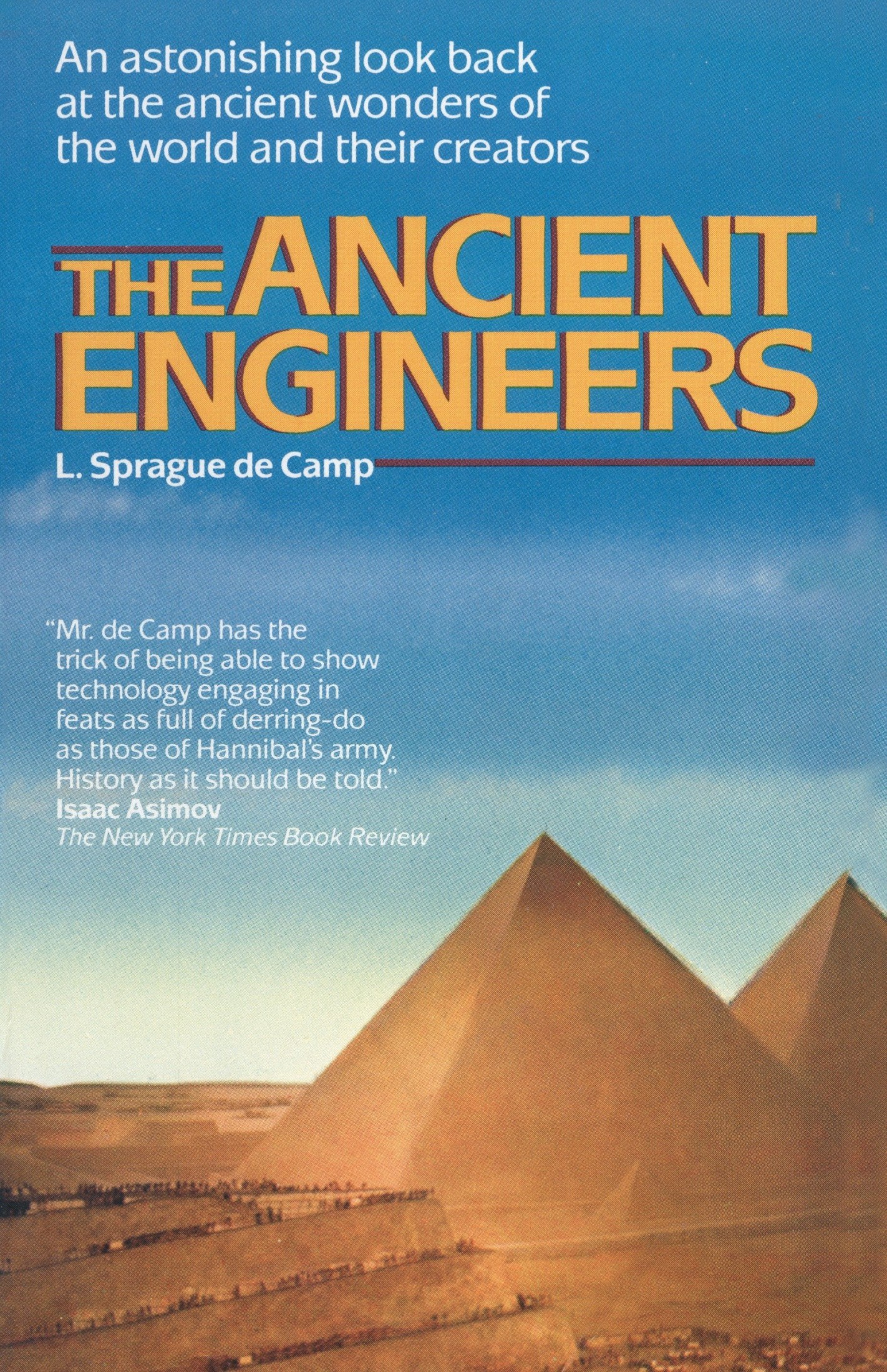
THE ANCIENT ENGINEERS
Technology and Invention from the Earliest Times to the Renaissance
From the dawn of history to the rise of the scientific method in the 16th and 17th centuries, invention and technology advanced slowly and painfully. Not because human beings were ignorant for thousands of years, but because most people were simply too busy trying to keep alive.
The time, imagination, and daring that every innovator must have were limited to a tiny group. It is about these gifted men - whose genius enabled the Egyptians to build their pyramids, the Phoenicians to cross the stormy seas, the Romans to erect magnificent public buildings - that this carefully researched and fascinating account has been written.
L. Sprague de Camp describes the methods used by early irrigators, architects, and military engineers to build and maintain structures to serve their rulers wants. He tells, for example, how the Pharaohs erected obelisks and pyramids, how Nebuchadnezzar fortified Babylon, how Dionysius’s ordnance department invented the catapult, how the Chinese built the Great Wall, and how the Romans fashioned their roads, baths, sewers, and aqueducts.
He recounts many intriguing anecdotes: .in Assyrian king putting up no-parking signs in Nineveh; Plato inventing a water clock with an alarm to signal the start of his classes; Heron of Alexandria designing a coin-operated holy water fountain; a Chinese emperor composing a poem to be inscribed on a clock invented by one of his civil servants.
The Ancient Engineers will delight lovers of the history of technology and invention with its accurate portrayal of the foundations of modern engineering. It will also delight lovers of economic and social history through its penetrating look at the material basis of civilization and its unusual explanation of social evolution.