Meet the Beatles
Author: Steven D. Stark
Subject: Beatles; England; Rock music - Social aspects; Rock music; Entertainment & Performing Arts; General; Social aspects; Rock musicians; Music; Rock musicians - England; Historical; Rock; Biography & Autobiography; History & Criticism; Genres & Styles; Composers & Musicians; Biography
Publisher: HarperCollins Publishers (2006-05-17)
f44bc34f-f32c-46c7-b
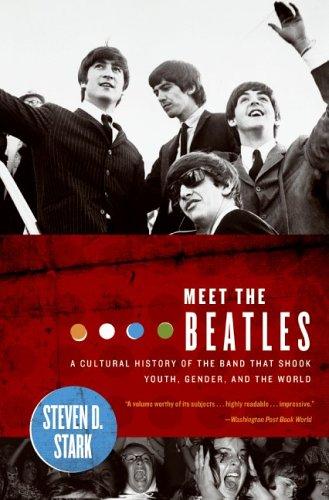
From Publishers Weekly
Journalist Stark wants to tell the story of John, Paul, George and Ringo in a "somewhat new way," focusing as much on the cultural trends that produced the Beatles—and the trends they created—as on the Fab Four themselves. He explores how the band's 1964 arrival in America coincided with both the adolescent explosion of the baby boomers and the cultural void left by Kennedy's assassination. He then backtracks to the Beatles' childhoods in Liverpool, a city with traditions of absent fathers, strong mothers and permissive attitudes toward androgyny—all major elements in the Beatles' music. Their moptop haircuts? A combination of "mild gender-bending" and German art college chic. Their trademark wit? Inspired by the_ Goon Show_, a popular BBC radio program. Their long-term impact? Practically impossible to overestimate, as Stark finds their influence on '60s protest movements, drug culture, women's liberation and more. Stark provides a thorough biography of the band and includes bits of trivia, such as the band's 1960 gig playing backup to a stripper. Throughout, Stark is sharp and insightful, even when he wades into the psychoanalytic waters of the John/Yoko and Paul/Linda relationships. Photos. Agent, Nat Sobel. (June 1)
Copyright © Reed Business Information, a division of Reed Elsevier Inc. All rights reserved.
From
In the introduction, Stark boldly asks, "Why on earth would anyone need another book about the Beatles?" He proceeds to describe his as an attempt to connect the band to "the larger cultural forces they triggered and came to represent." To that end, he expounds on the provocative premises that the Beatles feminized the culture, challenging the concept of masculinity, while Beatlemania empowered young women; that the group converged with its era in an unprecedented way, coming to embody 1960s counterculture; and that it possessed an unprecedented power over crowds. Adopting a generally chronological approach, Stark examines the Beatles' musical development as they continually reinvented themselves from their Liverpool days to their late '60s dissolution, which mirrored the collapse of the counterculture, and offers perceptive insights into their continuing appeal. Although he treads well-covered ground, Stark draws from fresh interviews with more than 100 Beatles experts and intimates and convinces us that his contribution is at least as worthy as the entire plethora of self-important insiders' memoirs and coffee-table tomes. Gordon Flagg
Copyright © American Library Association. All rights reserved